
Punarnavadi Kadha: Traditional Uses and Ingredients
-
Dr. Sandu
- Posted on
- 0 comments
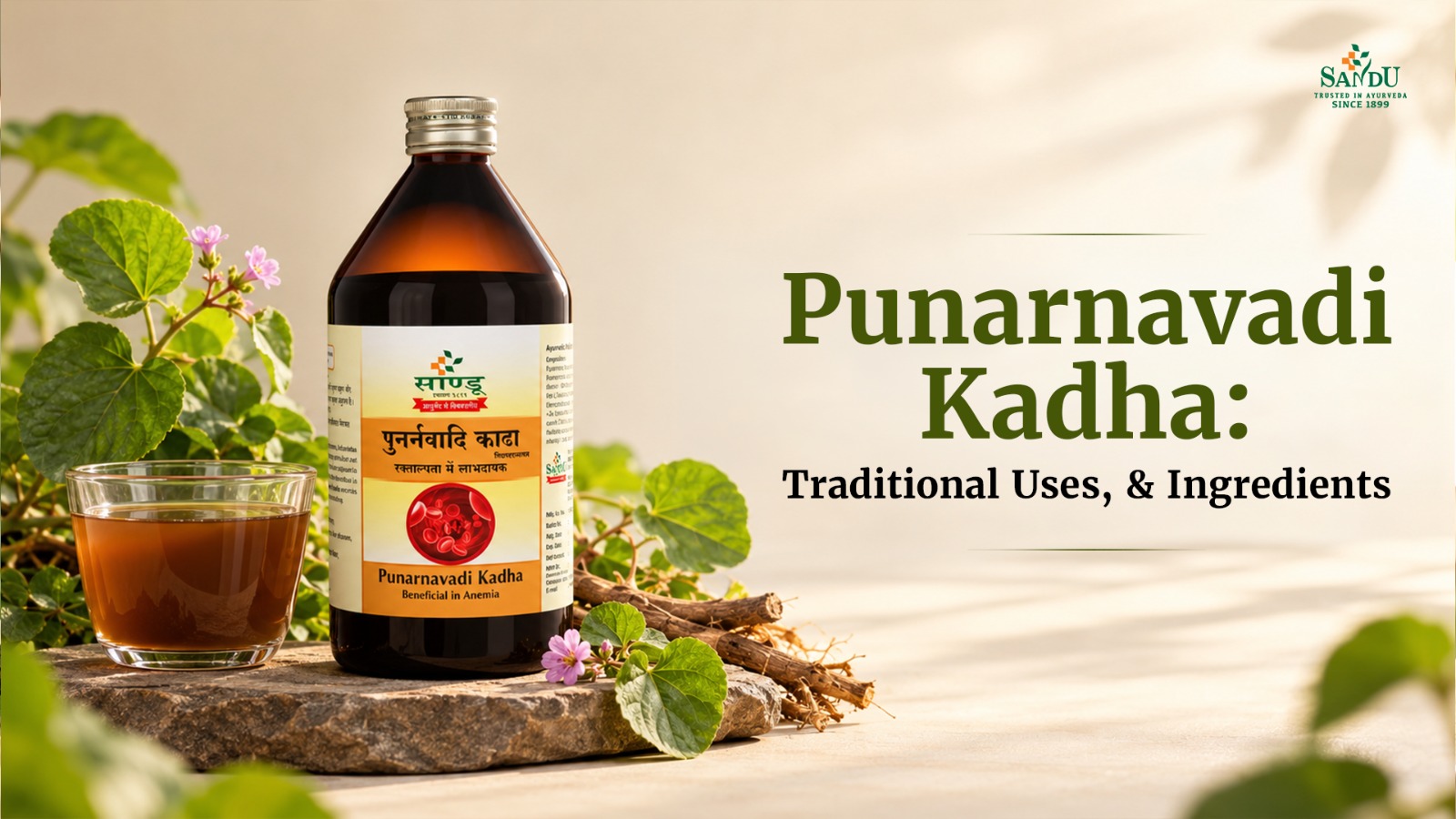
Ayurveda has long used herbal combinations to support the urinary system and overall wellness. Sandu Punarnavadi Kadha is one such formulation, built around herbs traditionally valued for their diuretic and renoprotective qualities. This blog covers Punarnavadi Kadha, its traditional uses, key ingredients, how to take it, and the precautions to keep in mind.
What Is Punarnavadi Kadha?
Sandu Punarnavadi Kadha is a traditional herbal formulation prepared with ingredients valued in Ayurveda for supporting urinary health and overall well-being.
Punarnavadi Kadha is traditionally used in:
● Oliguria (reduced urinary output)
● Ascites
● Oedema
● Anaemia
It is also traditionally used to help reduce the accumulation of body fluids linked to reduced kidney efficiency, to support urine output, and in urinary calculi.
Key Ingredients of Punarnavadi Kadha:
Punarnava
Punarnava is traditionally regarded as supporting the liver cells by helping remove toxins from the body. It is also valued for supporting the overall immune system.
Guduchi
Guduchi is traditionally described as having anti-inflammatory, immuno-stimulant, diuretic, and analgesic properties.
Katuki
Katuki is traditionally valued for supporting the repair and rejuvenation of healthy liver cells.
Neem
Neem is traditionally regarded as supporting the health of the liver and kidneys.
Benefits of Punarnavadi Kadha
Based on its traditional use and ingredients, Punarnavadi Kadha offers these benefits:
● Supports the overall functioning of the urinary system
● Supports urine output
● Helps reduce accumulated body fluids linked to reduced kidney efficiency
● Supports liver and kidney health through its key herbs
● Supports the body’s natural detoxification and immune function
How to Take Punarnavadi Kadha
The recommended dose is 4 teaspoonfuls (20 ml), 2 times a day, with an equal quantity of lukewarm water, after a meal, or as directed by the physician.
Important Precautions
● Take it only in the recommended dose, mixed with an equal quantity of lukewarm water after a meal, or as directed by your physician. Do not exceed the dose.
● Consult a healthcare practitioner before use if you are taking any regular medication, especially diuretics or medicines for blood pressure or diabetes, or if you are planning any medical procedure or surgery.
● Avoid it if you have a known allergy or sensitivity to any of its herbal ingredients.
● Because it is traditionally used for urine output and fluid balance, maintain adequate fluid intake unless your physician has advised otherwise.
● Do not use it as a substitute for medical care. If you notice swelling in the body, reduced urine output, or urinary discomfort, see a doctor promptly instead of self-medicating.
Conclusion
Sandu Punarnavadi Kadha is a traditional Ayurvedic formulation that combines Punarnava, Guduchi, Katuki, and Neem to support the urinary system, along with liver and kidney health. Understanding Punarnavadi Kadha, its ingredients, correct dose, and precautions helps you use it responsibly. Taken as directed and with a physician’s guidance, it can be a supportive part of a wellness routine.
Disclaimer:
This information is not a substitute for professional medical advice. Please do not use it to diagnose or treat any health problem without consulting your doctor.